Pennies in the Chandelier

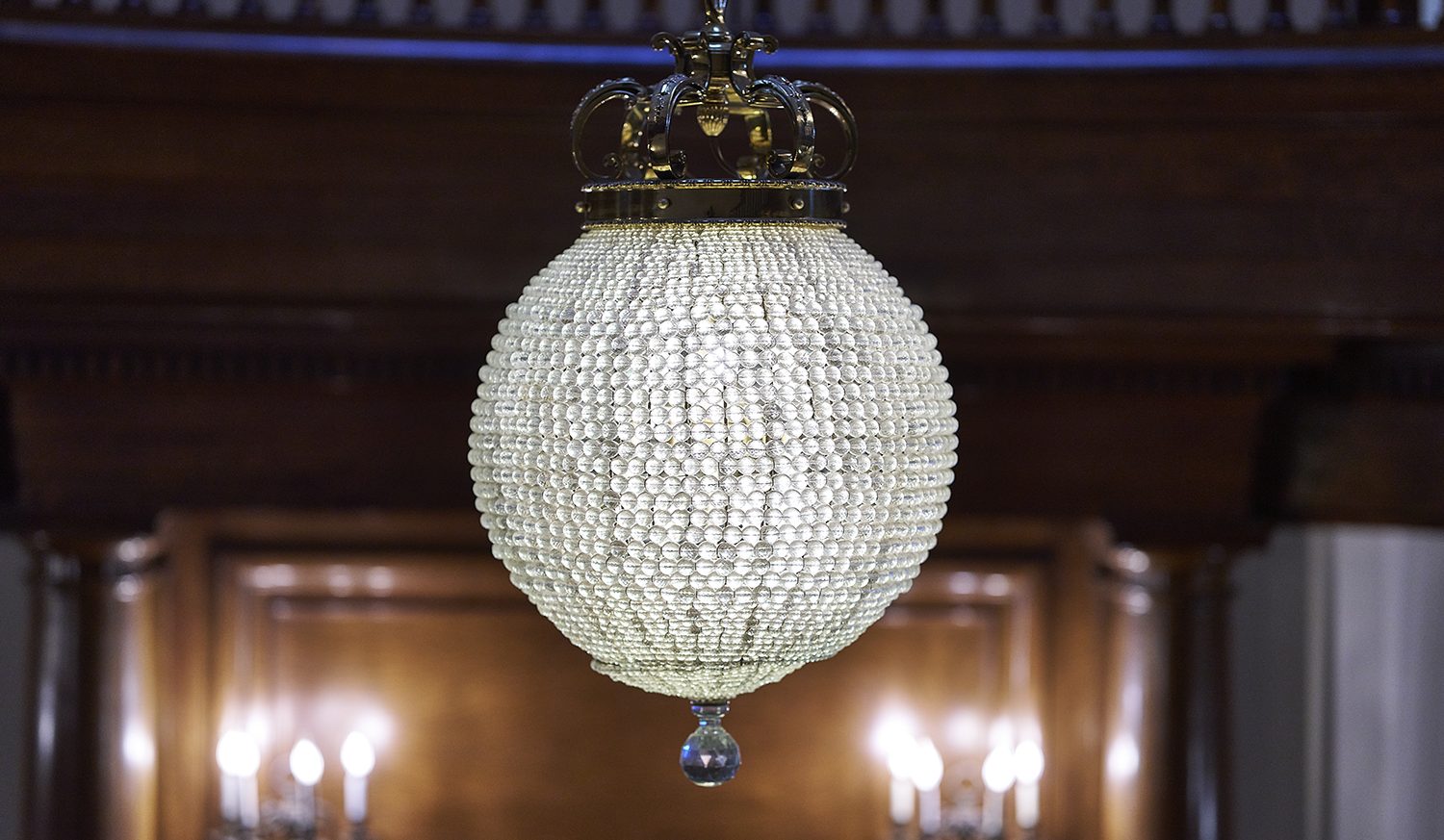
Before they built careers in optometry, Mitch and Regina Strand were students leaning over a spiral staircase on Beacon Street, tossing pennies into a chandelier.

Decades later, the brownstone where they first met still draws them back. But their hopes for NECO now reach well beyond its familiar walls.

When Mitchel Strand, OD ’84, arrived from California in the early 1980s, Boston offered plenty of surprises—including his first New England winter. A psychology major from the California state university system, he also had to adjust his picture of what a college campus should look like.

“There was no quad, no sprawling campus,” he recalls. “It was a brownstone building with folding tables and chairs. But it was really cool.”

The academic demands, however, were exactly what he had come for.

Regina Perfetto Strand, OD ’84, arrived with a biology background from Wheaton College. She remembers studying alongside classmates in the brownstone, learning in the clinics housed in the same building, and working with faculty who pushed students to do their best.

“I was a serious student,” she says, “and I worked hard.”

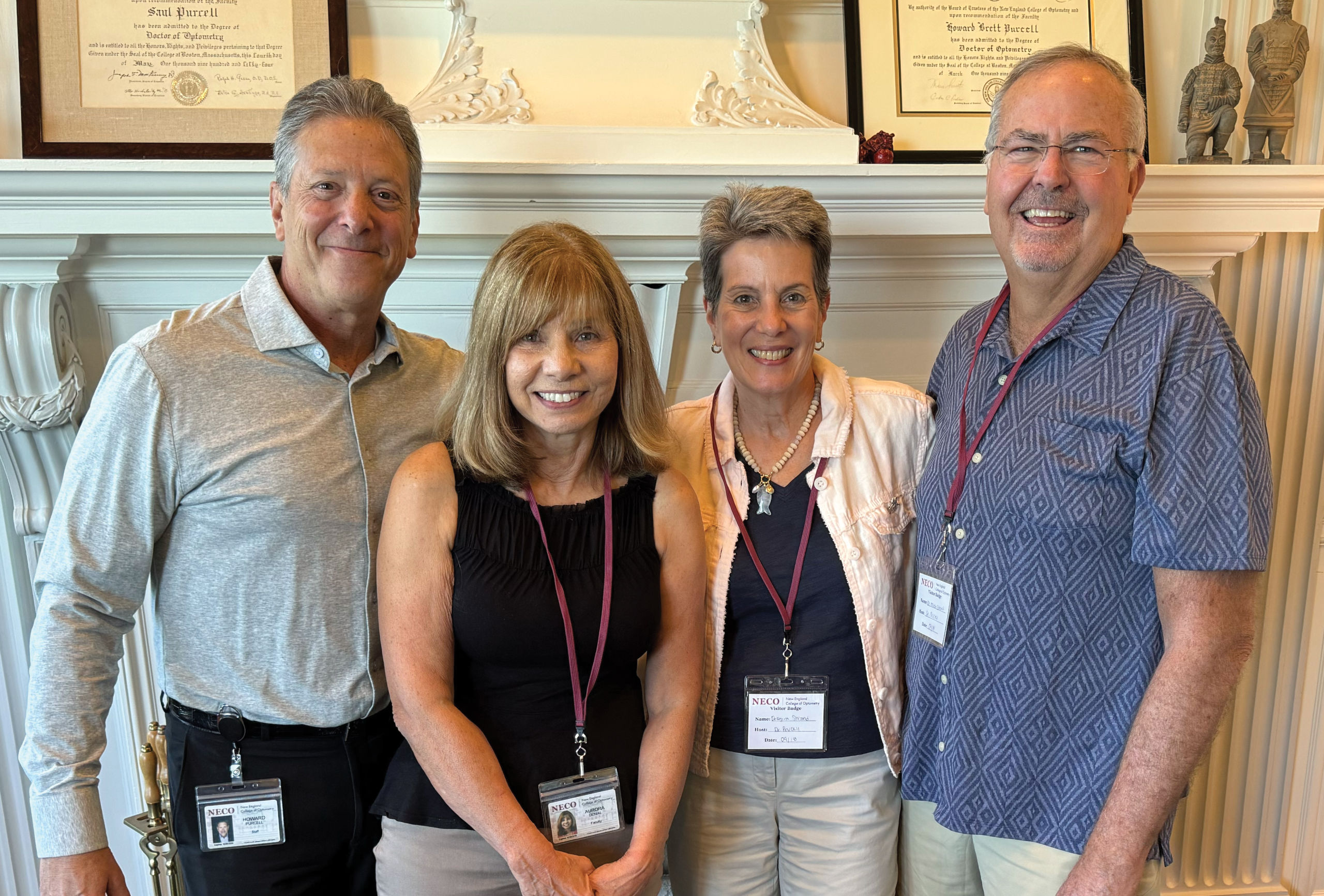
L-R: Dr. Howard Purcell, Dr. Aurora Denial, Regina Strand, Mitchell Strand

That work opened doors. For Regina, a six-week rotation in NECO’s pediatric low vision clinic introduced a field that would become her professional focus. After graduation, a mentor at a Connecticut practice encouraged her to pursue the specialty. She built on her NECO training, earned certification, and devoted the remainder of her career to pediatric low vision.

Optometry also gave her room to build the family life she wanted.

“It gave me a flexible, stable, well-paying career,” she says. “I could work part time and be home with my kids. That was incredibly valuable, especially as a woman in optometry.”

For Mitch, one of NECO’s most enduring lessons was that becoming a good practitioner means remaining a student.

“At NECO, you were supposed to observe other practitioners and offer critique,” he says. “What I found was that everyone had adopted their own best techniques from ‘plagiarizing’ the techniques of others — faculty, classmates, preceptors. You learn from others along the way, and you never stop.”

That habit of learning became inseparable from his identity.

“This profession becomes part of you,” he says. “It’s hard to give up because it’s so ingrained in who you are.”

The faculty who guided the Strands remain vivid in their memories. Regina recalls working alongside David Heath, OD ’83, in Frank Thorn, OD ’79’s lab. Mitch remembers Hyman Kamens, OD ’47, who knew his stepfather, and speaks warmly of John Carter, OD—“Big John”—and geometric optics instructor Paul Lappin, OD ’41. Both credit Richard Laudon, OD ’75, with leaving a lasting impression through his work in pediatrics.

“Those names stay with you,” Regina says.

Returning to Beacon Street recently, the Strands found a College that felt both familiar and transformed. Regina admired the library and dedicated study spaces. Mitch was struck by how much the facilities had evolved. “It’s beautiful now,” he says. “They’ve come a long way from the folding chairs.”

Their visit also reinforced their appreciation for the demands facing today’s students. Regina sees clinical experience, particularly rotations through private practices, as essential preparation for an increasingly complex profession.

“It’s hard to teach students everything, which is why rotating through private practices is so important.”

This year, the Strands turned their confidence in NECO’s future into a gift significantly larger than their previous support. They were inspired by the College’s leadership in optometric education and by the direction set by President Howard Purcell, OD ’84, their former classmate.

For Mitch, NECO’s progress makes the case for greater investment. “The College has made giant progress,” he says, “leaps and bounds ahead on its current budget. It could go much further and much faster with more support.”

His message to fellow alumni is direct: consider what the education has made possible—and what a portion of those earnings could make possible for someone else. “Think what NECO could do with more help,” he says.

The Strands see that support as an investment in the profession itself. Preparing future optometrists, strengthening education, and encouraging alumni participation all help build the future they want for optometry.

“Giving back to NECO is where it starts,” Mitch says.

Years ago, their pennies landed in a chandelier. Today, their generosity reaches the students following in their footsteps.